Kenya vs. Tanzania Safaris: The Ultimate 2026 Comparison Guide
If you are planning an East African safari, Kenya and Tanzania are the two gold standard destinations. While they share the iconic Serengeti Mara ecosystem, the experience in each country is distinct. This comprehensive 2026 guide provides the essential details to help you determine which destination perfectly fits your travel style, schedule, and budget.
Wildlife Density vs. Vast Scale: The Landscape Difference
The most fundamental difference lies in the “feel” of your safari.
-
Kenya (Masai Mara): Famous for its compact size and high wildlife concentration. Because the reserve is smaller, “Big Five” sightings are often more frequent in a shorter window. The ecosystem supports one of the highest predator densities on the planet.
-
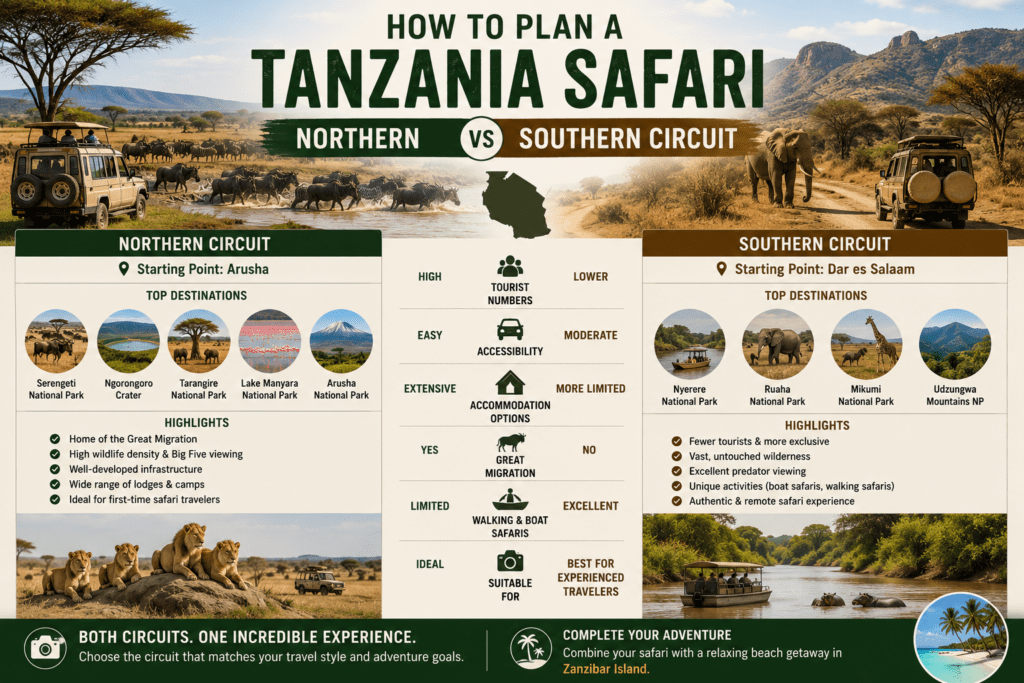
Tanzania (Serengeti): Vast, cinematic, and wild. The Serengeti is significantly larger than Kenya’s major reserves combined. It offers a sense of true isolation and cinematic horizons. If you want the “Endless Plains” experience and diverse habitats ranging from the volcanic Ngorongoro Crater to the baobab studded Tarangire Tanzania is the superior choice.
The Great Migration: 2026 Timing Strategy
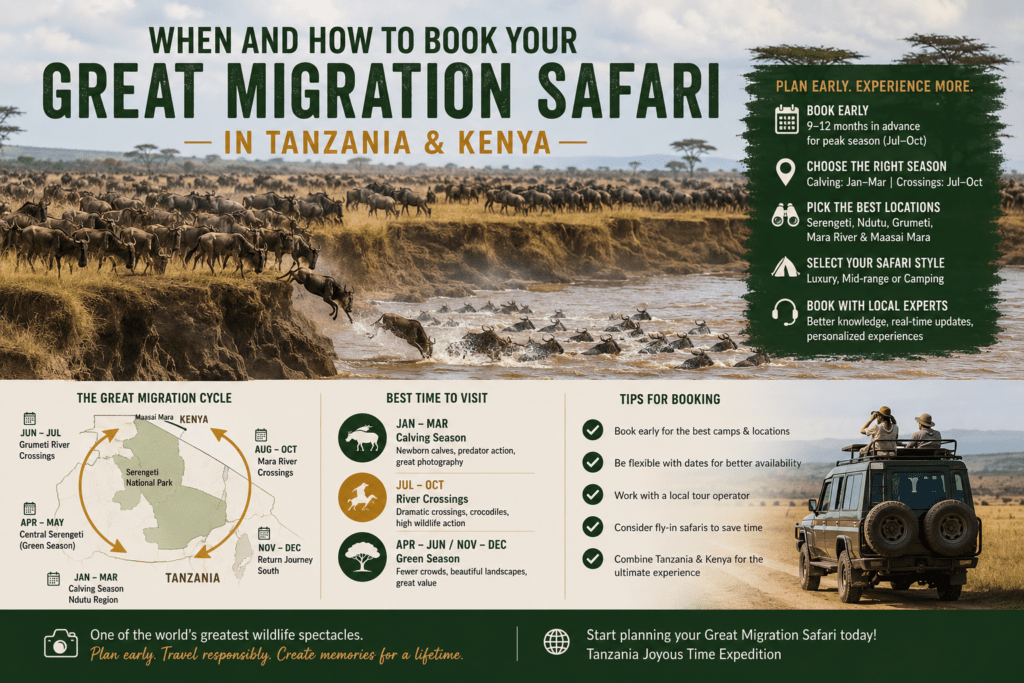
The Great Migration is a continuous, year-round loop. Your choice of country should be driven by the month you travel:
-
December – March (Tanzania Wins): The calving season in the Southern Serengeti (Ndutu) is a spectacle. Thousands of wildebeest calves are born, attracting heavy predator action.
-
April – June (Tanzania Wins): The herds move through the Western Corridor (Grumeti). This is the “Green Season,” offering lush landscapes, fewer crowds, and premium value.
-
July – October (Kenya Wins): The peak season for the dramatic Mara River crossings. If your dream is to witness the herds crossing the crocodile infested Mara River, Kenya is the place to be.
2026 Budget and Logistics: Why the Price Difference?
A Tanzania safari typically costs 20–30% more than an equivalent trip in Kenya. Understanding why helps you see the value:
-
Park Fees: Tanzania’s conservation fees are set by TANAPA and are generally higher, reflecting a strategy of high value, low density tourism.
-
Exclusivity: Tanzania’s larger park systems mean fewer vehicles per square kilometer, providing a more private wilderness experience.
-
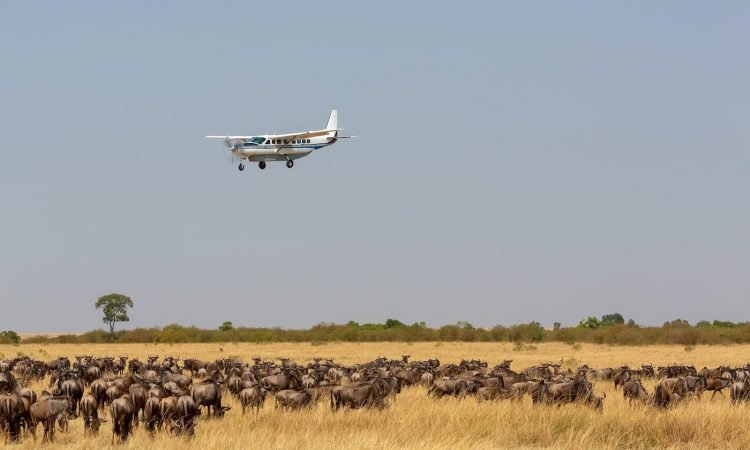
Logistics: Kenya’s infrastructure, centered around Nairobi, allows for shorter drives and more affordable overland transfers. Tanzania’s parks are more spread out, often requiring internal “fly-in” bush flights to maximize time, which adds to the logistical cost.
2026 New Highlights: Luxury and Wilderness
Both countries have reached new heights in luxury for 2026:
-
Tanzania: The focus is on remote exclusivity. Keep an eye on new high end camps in Ruaha and the Southern Serengeti that offer total seclusion. Furthermore, Tanzania remains the world leader for “Safari & Beach” combinations, as Zanzibar is just a short, seamless flight from the bush.
-
Kenya: The Private Conservancy model is Kenya’s trump card. Conservancies adjacent to the Mara allow for off road driving, night game drives, and guided walking safaris activities strictly limited or prohibited inside national parks.
Final Verdict: Which One Should You Pick?
-
Choose Kenya if: You are a first-time safari goer, have 5–6 days, are budget conscious, or your absolute priority is witnessing the dramatic Mara River crossings.
-
Choose Tanzania if: You crave vast, uncrowded landscapes, want to follow the Migration across several zones, or are looking for a complete “bush-to-beach” experience with Zanzibar.
Secure Your 2026/2027 Safari Today
Demand for exclusive lodges is at an all-time high for the 2026 season. The best positioned camps for the Migration often fill up 10–12 months in advance.
At Tanzania Joyous Time Expedition, we specialize in turning these travel dreams into seamless, joyous memories. Our team provides personalized itineraries that balance your budget with your wildlife priorities. Contact us today to start planning the journey of a lifetime